Valheim Mods Broken After Update: What to Do
Scope: Vanilla standard survival; world modifiers, mods and later patches may change the rules
Language: English中文
Key points
- There is no official mod support and no compatibility guarantee — protect your data, build a baseline, then find the problem.
- Save restorable copies of character and world and label them with the date and game version, not “latest backup”.
- Test vanilla with a fresh character and world, and remove the loader as well as the mods when you isolate.
- Restore in dependency order, one related group at a time; an update date on a mod page is not proof of compatibility.
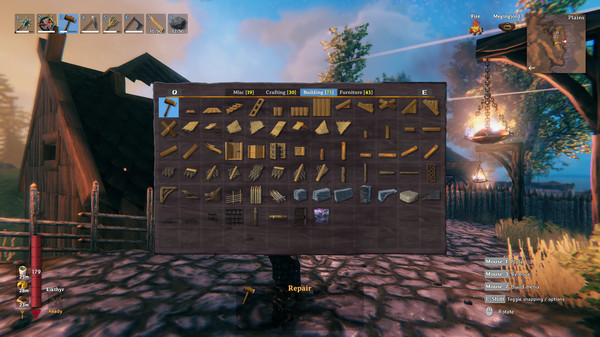
After a major update, do not retry a whole old mod list on your main save. The game launching fine does not mean the loader, dependencies and mods have kept up. There is no official mod support and no guarantee third-party mods work — see the official statement. Safest order: protect your data, build a baseline, then find the problem.
Step one: separate your world and character from the testing
Quit the game or stop the server cleanly, save restorable copies of the character and the world, and write down mod names, versions, dependencies and configs. Label that copy with the date and the game version — do not just call it "latest backup".
If you use mods that add items, buildings or map content, be especially careful not to open your main world in a mod-free environment and save it. Missing content can cause irreversible changes. Do vanilla testing with a fresh test character and world, not with a save you have had for years.
Step two: work out whether the base game is fine
Temporarily isolate the loader and the mods in whatever way your mod manager supports, and confirm a vanilla test environment can launch and save. Moving one mod file out of the way does not necessarily disable the loader; we recommend removing the loader as well before testing — see the update and mod notes.
If the vanilla test also fails, record the errors and go through official support rather than continuing to blame a single mod. If vanilla is fine, move on to the next step.
Step three: restore in dependency order
Check first whether the loader and the core dependencies support your current game version, then restore a small number of mods and test. Change one related group at a time and record what happens at launch and when entering the world. When you update dozens of components at once and something breaks, the real cause is very hard to isolate.

An update date on a mod page is not proof of compatibility. Look at the supported version, the dependencies and the known issues; "it works for someone else" may mean a different client, config or server setup. When there is no clear compatibility information, waiting beats gambling with your real save.
Step four: a shared checklist for multiplayer servers
Record the client requirements and the server requirements separately, then check each player's versions and configuration. Not every mod has to be installed on both sides, and not every client-side mod is irrelevant to the server — go by each project's own documentation.
Have one player join a test world, interact and leave before you widen the test. Getting in once does not mean every system works; cover the gear, buildings and storage features your group actually uses.
Do not substitute three high-risk moves for troubleshooting
Do not overwrite configs without a backup; do not delete a whole character or world to clear an error; and do not go looking for "one-click fix packs" on unknown download sites. When you need to roll back, preserve the broken state and your existing backups, then restore to a specific point in time.
Once the whole environment is stable, let your real world continue. A group that only wants to play the new content can also spin up a temporary vanilla world and leave the modded world waiting for updates. Separating "what I want to play today" from "everything old must work right now" avoids a lot of unnecessary loss.
Four steps, in order
| Step | What you do | Why this order |
|---|---|---|
| 1. Protect the data | Quit cleanly, save restorable copies of character and world, record mods, versions, dependencies and configs | Opening a modded world in a mod-free environment and saving it can cause irreversible changes |
| 2. Build a baseline | Isolate the loader and the mods, then confirm a fresh test character and world can launch and save | If vanilla also fails, the problem is not one mod |
| 3. Restore in dependency order | Check the loader and core dependencies first, then restore a small group at a time | Updating dozens of components at once makes the real cause very hard to isolate |
| 4. Line up the multiplayer side | Record client and server requirements separately, then check each player's versions and config | Not every mod has to be on both sides, and not every client-side mod is irrelevant to the server |
Three moves that are not troubleshooting: overwriting configs without a backup, deleting a character or world to clear an error, and downloading “one-click fix packs” from unknown sites.
Sources
The mechanics and numbers in this guide come from the material below. Open the original pages to check them yourself.
- S001 official statement www.valheimgame.com Accessed
- S002 update and mod notes www.valheimgame.com Accessed
Related guides
Valheim 1.0: Restart Your World or Keep It?
Which old saves still work, where new content can generate, and how builders, returning players and achievement hunters should each handle the 1.0 upgrade.
v1.0.12Valheim Co-op: Host, Crossplay and Servers
Choose between a host-run session and a dedicated server, run a join test, work through connection problems, and set co-op rules a long world can survive.
v1.0.12Valheim Crafting & Repair Guide
How Valheim crafting stations, smelting and forging fit together, with a fixed order for checking missing recipes, materials, station level and repairs.
v1.0.12